
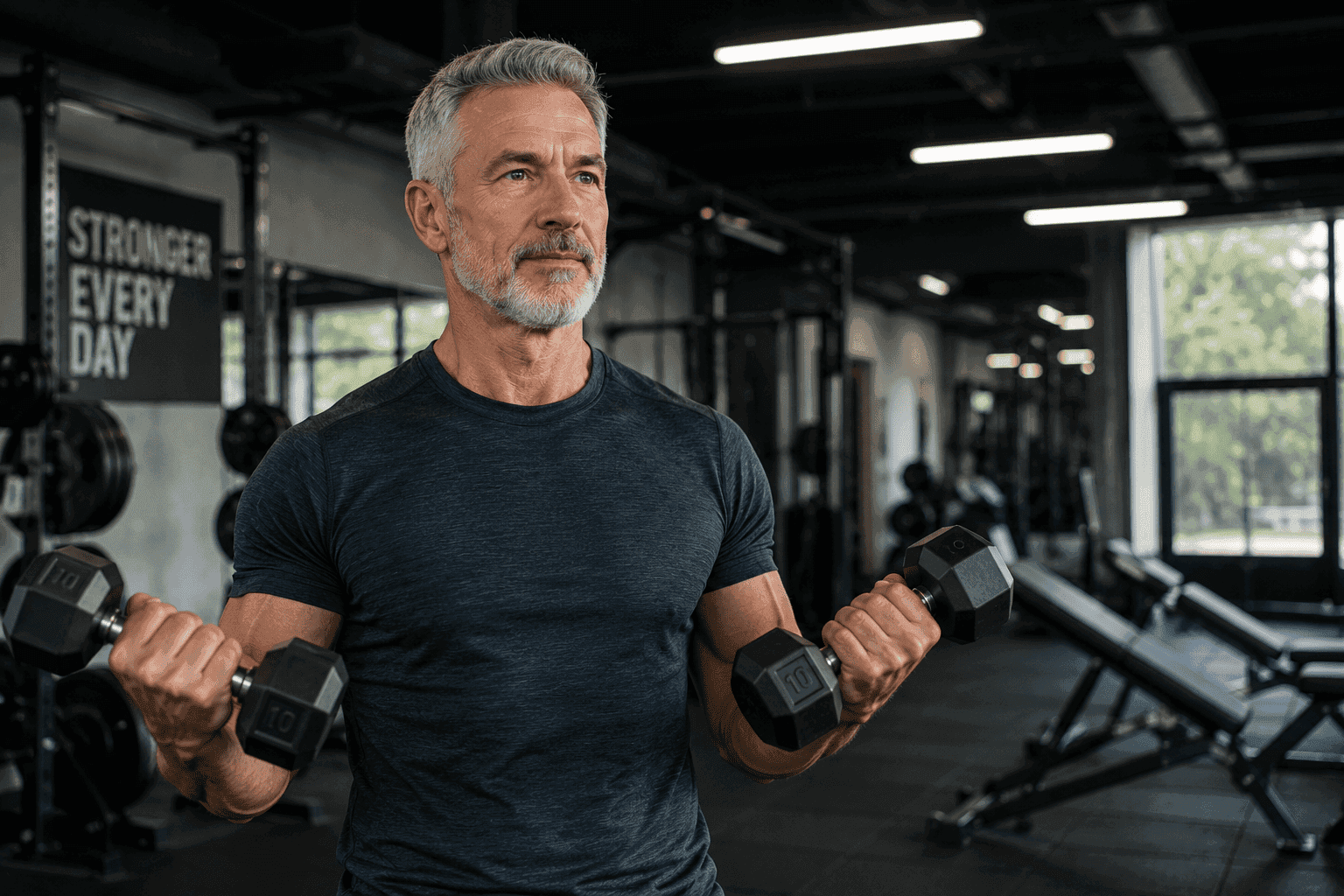
The Long-Term Benefits of Strength Training for Everyday Life: Building a Body That Works
Strength: The Foundation of Capability
When we talk about "strength training," we often imagine a gym full of heavy iron, loud music, and people trying to set world records. We view strength as a niche pursuit for athletes and bodybuilders.
But strength is not a luxury; it is a fundamental human requirement. Every time you stand up from a chair, carry groceries, pick up a child, or walk up a flight of stairs, you are using your strength.
As we age, our strength is the primary determinant of our quality of life and our independence. If you lose your strength, you lose your ability to interact with the world. Strength training is the act of "building a body that works." In this article, we’ll explore the long-term benefits of being strong and why lifting weights is the single best investment you can make for your future self.
---
1. Functional Strength: Making Daily Tasks Effortless
"Functional Strength" is strength that transfers directly to real-life movements.
- A Squat is the same movement as sitting down and standing up.
- A Deadlift is the same movement as picking a heavy box off the floor.
- An Overhead Press is the same movement as putting luggage in an overhead bin.
When you train these movements in the gym with progressive overload, you are making your everyday life easier. The grocery bags that used to feel heavy now feel light. The stairs that used to make you winded now feel effortless. By raising your "ceiling" of strength, you lower the relative "cost" of every other movement you perform. You become more efficient and less fatigued by the demands of daily life.
---
2. Postural Integrity: Solving the "Office Worker" Ache
Most of us spend our days in "flexion"—hunched over desks, phones, and steering wheels. This leads to a predictable pattern of weakness: tight chest, weak upper back, inactive glutes, and tight hip flexors. This is the recipe for chronic neck, shoulder, and lower back pain.
Strength training is the antidote to the "Office Worker" posture.
- Exercises like Rows and Face Pulls strengthen the muscles of the upper back, pulling your shoulders back and opening your chest.
- Exercises like Deadlifts and Glute Bridges wake up the posterior chain, providing a stable foundation for your spine.
A strong body is a "balanced" body. When your muscles are functioning correctly, they hold your skeleton in its optimal alignment, reducing the strain on your joints and eliminating the chronic "aches" of a sedentary life.
---
3. Injury Prevention: Strengthening Connective Tissue
Muscles get all the attention, but strength training also strengthens your connective tissues—your tendons, ligaments, and fascia.
These structures are the "glue" that holds your body together. Unlike muscles, which have a rich blood supply and adapt quickly, connective tissues have poor blood supply and adapt slowly. They require consistent, progressive loading to become resilient.
By lifting weights, you are "toughening" your joints. You are making your tendons thicker and your ligaments more stable. This is why athletes who strength train have significantly lower rates of ACL tears, ankle sprains, and muscle pulls. For the non-athlete, this means you are much less likely to "throw your back out" while gardening or twist your knee while walking the dog. Strength is your best insurance policy against the random injuries of life.
---
4. Metabolic Resilience: Insurance Against Aging
As we’ve discussed in our article on "How Building Muscle Changes More Than Your Appearance," muscle is a metabolic powerhouse.
As you get older, your metabolism naturally slows down. This is largely due to the loss of muscle mass (sarcopenia). By consistently strength training, you "opt-out" of this decline.
- You maintain higher insulin sensitivity.
- You have a higher resting metabolic rate.
- You are better able to manage your body fat levels.
Strength training provides Metabolic Resilience. It allows your body to handle the occasional "bad" meal or period of inactivity without spiraling into poor health. It keeps you lean and vibrant well into your 60s, 70s, and beyond.
---
5. Cognitive Longevity: The Link Between Muscle and Brain Health
The most exciting recent research in longevity is the link between muscle strength and brain health. There is a direct correlation between lower-body strength and a lower risk of cognitive decline and dementia.
Why?
- Myokines: As mentioned before, contracting muscles release chemicals that support brain health.
- Vascular Health: Strength training improves the health of your arteries, ensuring your brain receives a steady supply of oxygen and nutrients.
- Grip Strength: Grip strength is often used as a "biomarker" for overall biological age. A strong grip is highly correlated with a healthy heart and a sharp mind.
By training your body, you are training your brain. You are "future-proofing" your cognitive abilities just as much as your physical ones.
---
6. Confidence in Capability: Navigating the Physical World
There is a profound psychological shift that happens when you realize you are strong. You stop being "afraid" of the physical world.
- You aren't afraid of the heavy door.
- You aren't afraid of the long walk.
- You aren't afraid of helping a friend move.
This Confidence in Capability changes how you move through space. You carry yourself with more presence. You are more likely to try new things—whether it’s a new sport, a travel adventure, or a physically demanding hobby. Strength gives you the "permission" to live a larger, more active life.
---
7. How to Train for Life, Not Just the Gym
To build a body that works for life, your training should be well-rounded.
The Importance of Multi-Planar Movement
Life doesn't happen in a straight line. You twist, you turn, and you move sideways. Your training should reflect this.
- Incorporate lateral lunges, rotational work, and carries (like a Farmer’s Walk).
- Use our [exercise guide](https://gymguide.co/exercises) to find a variety of movements that challenge your body from different angles.
Grip Strength and Longevity
Don't use straps for every lift. Build a strong "handshake." Deadlifts, pull-ups, and carries are excellent for building the grip strength that is so vital for long-term health.
Balancing Strength with Mobility
Strength without mobility is "rigidity." Ensure you are moving your joints through their full range of motion. A strong muscle that is "stiff" is still at risk for injury. Use our [BMI calculator](https://gymguide.co/bmi-calculator) and [macro calculator](https://gymguide.co/macro-calculator) to monitor your health, but judge your progress by how well you move in your everyday life.
---
Conclusion: The Ultimate Investment
Strength training is the "compound interest" of health. The work you do today will pay dividends for the rest of your life.
You don't need to be a "lifter" to benefit from lifting. You just need to be a human who values their capability and independence. Build a body that can handle whatever life throws at it. Build a body that works.
The strongest version of you is waiting. Let’s get to work.
---
Frequently Asked Questions (FAQ)
1. Will I get "stiff" if I lift heavy weights?
Only if you ignore mobility. Proper strength training (moving through a full range of motion) actually increases flexibility. It’s "weighted stretching." A strong muscle is a healthy, mobile muscle.
2. Is it safe for older adults to start strength training?
Yes, and it is arguably more important for them. Studies show that even people in their 90s can gain strength and muscle. However, it is essential to start slowly and focus on proper form. Use our [exercise guide](https://gymguide.co/exercises) to find beginner-friendly variations.
3. How often should I train for "functional" results?
2-3 days a week is plenty to see significant long-term benefits. The key is consistency over years, not intensity over weeks.
4. What is the most important "functional" exercise?
The Squat (in any form). It is the foundational human movement for independence. If you can't squat, you can't get out of a chair or use a bathroom unaided.
5. Why do I feel more tired after starting strength training?
Your body is adapting to a new stress. This is normal. Ensure you are eating enough protein and calories (using our [calorie calculator](https://gymguide.co/calorie-calculator)) and prioritizing sleep. After 2-4 weeks, your energy levels will stabilize and eventually become higher than before you started.
---
Related Posts:- [How Building Muscle Changes More Than Your Appearance](/blog/how-building-muscle-changes-more-than-your-appearance)
- [The Link Between Confidence and Physical Activity](/blog/the-link-between-confidence-and-physical-activity)
- [Why Recovery and Rest Are Essential for Progress](/blog/why-recovery-and-rest-are-essential-for-progress)
🚀 Ready to start your transformation?
Download GymGuide Free →