
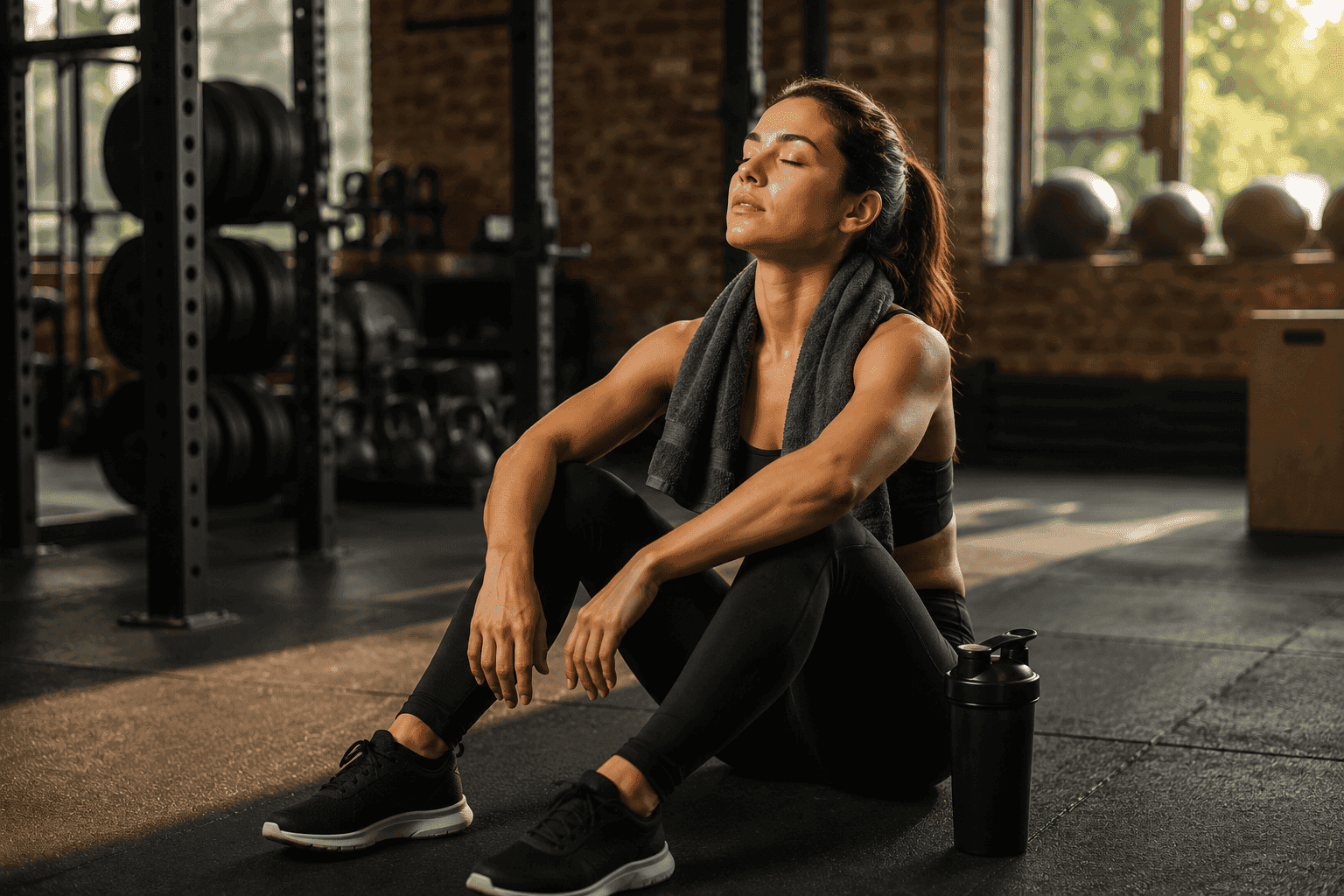
How Exercise Helps Reduce Anxiety and Stress Naturally: The Biological Antidote to Modern Chaos
The Anxiety Epidemic: Why We’re Always on Edge
We are living in an era of "High Anxiety." Statistics show that anxiety disorders are now the most common mental illness in the world, affecting hundreds of millions of people. We are constantly "on alert," worried about the future, ruminating on the past, and feeling a pervasive sense of dread that we can't quite put into words.
Most people treat anxiety with medication, therapy, or "numbing" behaviors like scrolling or emotional eating. While these have their place, they often ignore the most effective, natural, and biologically supported "anti-anxiety" intervention available: exercise.
Your body was designed to use movement to "process" the physiological signals of stress. In this article, we’ll explore the deep biological reasons why exercise is the ultimate antidote to anxiety and how you can use it to reclaim your peace of mind.
---
1. The "Anxiety Sensitivity" Theory: How Exercise Desensitizes the Brain
Anxiety is often a "fear of fear." People with high anxiety sensitivity are terrified of the physical symptoms of anxiety—a racing heart, shortness of breath, sweating, and muscle tension. When they feel these symptoms, their brain interprets them as a sign of an impending catastrophe (like a heart attack or a panic attack), which triggers even more anxiety.
Exercise is a form of Exposure Therapy for these physical symptoms.
- When you run, your heart races.
- When you lift weights, you sweat and feel tension.
- When you do HIIT, you get out of breath.
By voluntarily exposing yourself to these physical states in a safe environment (the gym), you teach your brain that these sensations are not dangerous. You "de-couple" the physical symptoms from the feeling of panic. Over time, your "Anxiety Sensitivity" decreases. You become comfortable with the sensation of a fast heart rate, making you much more resilient when it happens during a stressful moment in real life.
---
2. Neurochemical Regulation: GABA, Glutamate, and Endocannabinoids
Exercise is like a "neurochemical pharmacy." It doesn't just make you feel good; it restores balance to the chemicals that regulate your mood.
- GABA: This is the brain’s primary "inhibitory" neurotransmitter. It acts like a "brake" on the nervous system, slowing down overactive neural firing. Many anti-anxiety medications (like benzodiazepines) work by increasing GABA. Exercise naturally boosts GABA production.
- Glutamate: This is an "excitatory" neurotransmitter. An imbalance (too much glutamate and not enough GABA) is a hallmark of anxiety. Exercise helps "clean up" excess glutamate.
- Endocannabinoids: While everyone knows about endorphins, exercise also triggers the release of endocannabinoids (the body’s version of cannabis). These chemicals are responsible for the "calm after the storm" feeling you get after a workout. They improve mood, reduce pain, and create a sense of well-being.
---
3. The HPA Axis: Training Your Body to Stay Calm Under Pressure
Your HPA Axis (Hypothalamic-Pituitary-Adrenal) is the command center for your stress response. In people with chronic anxiety, the HPA axis is "hyper-responsive"—it triggers a massive cortisol spike for even the smallest stressors.
Exercise acts as a "Stress Buffer." When you work out, you are subjecting your body to a "controlled stressor." Initially, this increases cortisol. However, after the workout, the body responds by "downregulating" the stress response.
Consistent exercisers have a "muffled" HPA axis. They don't react as intensely to psychological stress because their body has been "trained" to handle higher levels of physical stress. You are effectively building a "thicker skin" at a hormonal level.
---
4. Reducing Systemic Inflammation and Its Link to Mental Health
We are learning that "Anxiety" is often a symptom of "Inflammation." Chronic, low-grade inflammation in the body can cross the blood-brain barrier and cause neuro-inflammation, which is directly linked to anxiety and depression.
Physical activity is one of the most powerful anti-inflammatory interventions in existence. It reduces the production of pro-inflammatory cytokines and improves the health of your gut microbiome, which is often called your "second brain."
By cleaning up the "internal environment" of your body, you are creating a more stable foundation for your mind. A "fit" body is a less inflammatory body, which leads to a calmer, more focused brain.
---
5. Cognitive Distraction and the "Mental Break" Effect
Sometimes, the best way to solve a problem is to stop thinking about it. Anxiety is a state of "over-thinking."
Exercise provides a Cognitive Distraction. It is very difficult to ruminate on your mortgage payments or a rude comment from a co-worker when you are trying to lift a heavy barbell or finish a difficult sprint. The "effort" required for the workout forces your brain into the "Present Moment."
This "Mental Break" allows your brain's emotional centers to cool down. It breaks the cycle of negative thought patterns and provides a "reset" for your perspective. You often find that the problem that felt like a "10 out of 10" disaster before the gym feels like a "2 out of 10" manageable task afterward.
---
6. The Role of Self-Efficacy and Control in Managing Stress
Anxiety is fundamentally a "loss of control." We feel anxious when we feel like we cannot influence our environment or our future.
Exercise restores a sense of Agency. When you go to the gym, you are in control. You choose the exercise, you choose the weight, and you choose the effort. When you see progress—when you can do one more rep or run one more minute—you are building a deep sense of "Self-Efficacy."
This belief—"I can handle this challenge"—is the ultimate shield against anxiety. By mastering your physical environment, you build the confidence to master your psychological environment. Use our [exercise guide](https://gymguide.co/exercises) to follow a structured plan that guarantees "small wins" every single week.
---
7. How to Build an "Anxiety-Proof" Routine
To maximize the anti-anxiety benefits of fitness, you should aim for variety and consistency.
High-Intensity Intervals (HIIT) vs. Steady-State
- HIIT is excellent for "burning off" excess adrenaline and adrenaline and building "Anxiety Sensitivity" resilience.
- Steady-State Cardio (like walking or light jogging) is better for "circadian alignment" and long-term cortisol management.
- Strength Training is vital for building self-efficacy and "grounding" the nervous system through heavy, controlled movement.
The Importance of Progressive Overload
Don't just do the same thing every day. Use our [BMI calculator](https://gymguide.co/bmi-calculator) and [calorie calculator](https://gymguide.co/calorie-calculator) to track your physical changes, but also track your "Mental PRs." How much calmer do you feel this month compared to last month?
Mindful Movement and Yoga
Incorporate sessions where the focus is on the breath and the mind-body connection. This teaches you how to "downregulate" your nervous system on command.
---
Conclusion: Reclaiming Your Peace
Anxiety is not a life sentence. It is a biological state that can be managed, and even mastered, through intentional movement.
Don't wait until you "feel better" to work out. Work out so that you feel better. Use your body to heal your mind. Every step you take, every weight you lift, and every breath you take in the gym is a direct message to your brain that you are safe, you are capable, and you are in control.
The strongest version of you is also the calmest version of you. Let’s get to work.
---
Frequently Asked Questions (FAQ)
1. Can exercise cause a panic attack?
In people with very high "Anxiety Sensitivity," the fast heart rate of exercise can feel like a panic attack. If this happens, start with low-intensity walking or swimming and slowly build up. You are "teaching" your brain that a fast heart rate is safe.
2. Is there a "best" time of day to work out for anxiety?
Morning workouts are often best for setting a "calm" neurochemical baseline for the day. However, evening workouts can be great for "burning off" the stress of a long day. The "best" time is whenever you will do it consistently.
3. How much exercise do I need to reduce anxiety?
Research suggests that even 20-30 minutes of moderate activity 3-5 times a week can have a significant effect on anxiety levels. However, daily movement (like walking) provides the most consistent benefits for stress management.
4. What if I'm "too anxious" to go to a crowded gym?
"Gym Anxiety" is real! Start at home using bodyweight exercises or walk in a quiet park. Once your confidence and self-efficacy grow, you’ll find it easier to navigate a gym environment. Use our [macro calculator](https://gymguide.co/macro-calculator) to ensure you're fueled, which can also help with stability and focus.
5. Can I replace my medication with exercise?
Never stop or change medication without consulting your doctor. However, many people find that consistent exercise allows them to work with their doctor to eventually reduce their dose. Think of exercise as a powerful "co-therapy" that makes all other treatments more effective.
---
Related Posts:- [The Hidden Health Effects of Chronic Stress](/blog/the-hidden-health-effects-of-chronic-stress)
- [The Mental Benefits of Walking Every Day](/blog/the-mental-benefits-of-walking-every-day)
- [Why Sleep Is More Important Than Most Supplements](/blog/why-sleep-is-more-important-than-most-supplements)
🚀 Ready to start your transformation?
Download GymGuide Free →